Monday, June 28, 2010

Summer Camp Session #2

On Friday, the second session of summer camp ended at the Audubon Center at Francis Beidler Forest.  Images from session #1 can be seen here.

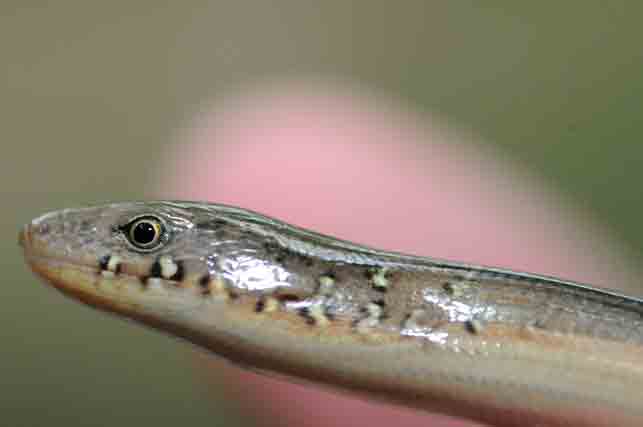
The order of events for the second session changed slightly due to Dennis Blejski's work schedule.  We had the herp identification activity after lunch on the first day.  We captured some of the specimens over the weekend, but found an Eastern Box Turtle and a Glass Lizard crossing roads on our way to work and a Southern Copperhead crossing the Beidler Forest driveway.  A couple of lizards around the picnic tables and we had a collection filling all 18 stations!


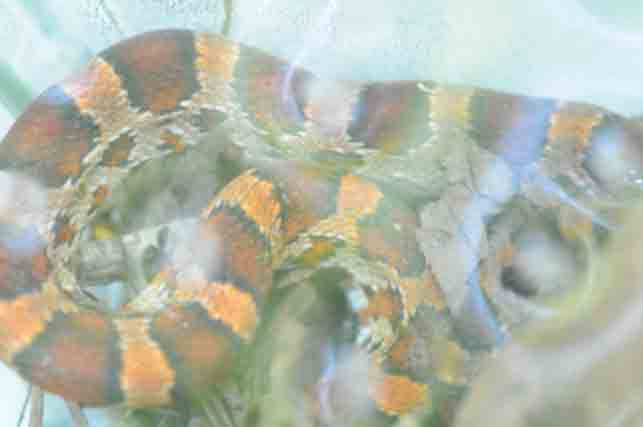




Southern Copperhead and Eastern Box Turtle


Southern Copperhead
Common Snapping Turtle
Corn Snake
Southern Leopard Frog
Three-lined Salamander
Gray Treefrog

Eastern Box Turtle
Southern Toad (toadlet)
Ground Skink
Glass Lizard
Southern Dusky Salamander
Southern Leopard Frog
Gray Treefrog

On Tuesday, we took our first trip around the boardwalk.  We are not the only creatures that choose not to move around when the heat and the humidity begin to soar!  Animal sightings were few.

Brown Water Snake
Barred Owl

After lunch on the second day, Dennis Blejski brought a collection of herps from his collection.
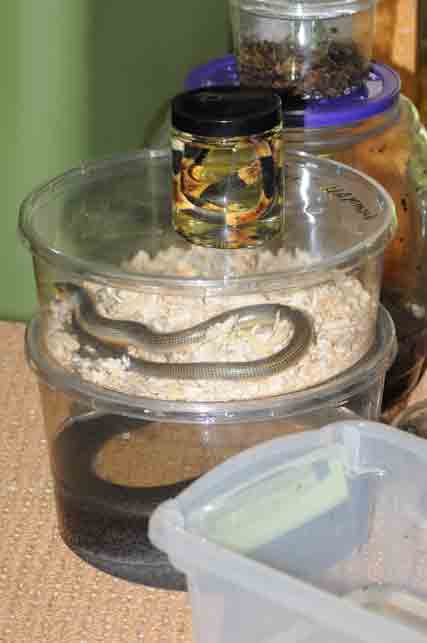


Bullfrog
Scarlet Kingsnake
Diamondback Terrapin
American Alligator


Greater Siren

While off the boardwalk, we saw a variety of animals, but the magnificently-camouflaged Southern Copperhead was the highlight of the walk!


Centipede
Millipede
Southern Copperhead

Although amphibians are secretive and sunny, hot days are not the best conditions for finding them, campers did use their newly-learned frog call skills to identify various singing treefrogs.  We also nearly stepped on a Marbled Salamander while checking our minnow traps behind the outdoor classroom.


Marbled Salamander


Throughout the week, campers also created various herp-related art items.


Camp ended on Friday with a herpathon along the boardwalk, lunch with families, and the presentation of diplomas and a CD of the week's images and sounds.  Appropriately, a Southern Black Racer moved through the picnic area to help close out the week of herps.

Southern Black Racer

The final session begins the third week of July.  Let's hope the herps don't get a summer vacation!

Images by Mark Musselman

Sunday, June 20, 2010

Mosquito Fish

As we prepare for the tomorrow's start of summer camp session #2 at the Audubon Center at Francis Beidler Forest, we set out the minnow traps baited with sardines.  We will certainly capture a number of crayfish as we did last week, but those crayfish attracted the attention of a Lesser Siren, which is related to the camp's theme of Reptiles and Amphibians.  Other non-target species also find their way into the traps.

During our crayfish identification exercise last week, we caught over a dozen water scavenger beetles (Dytiscidae).  Apparently, they really like sardines!


Today when we set the traps, in one we found what appears to be a female Eastern Mosquito Fish (Gambusia holbrooki) full of young.  Members of the family Poeciliidae give birth to live young.  This species likes the vegetated areas of slow moving or calm fresh waters.  This fish was caught in the minnow trap set in the powerline right-of-way where calm water pools behind the beaver dam and ample sunlight allows plenty of vegetation to grow in the water.  The vegetation ends immediately at the treeline.  Mosquito Fish mainly eat surface-dwelling insects and their larvae.


As we care little for decaying fish and mosquitoes, we're happy to find water scavenger beetles and Mosquito Fish in our swamp!

Images by Mark Musselman

Saturday, June 19, 2010

Crayfish

So you thought a crayfish was simply a crayfish?  Alas, there are 315 species in North America!  Many of these species exist in individual cave systems or in single creek systems, but that is still some variety!


This week, we set the minnow traps in the swamp behind the outdoor classroom in an attempt to identify the crayfish species resident at the Audubon Center at Francis Beidler Forest.  Although crayfish have been studied throughout North America, it has not been easy for us to identify our crayfish.  First, we needed to find a key to crayfish identification.  We found a key on the Internet and know that the crayfish we captured are in the genus Procambarus.  Unfortunately, there are 176 species in the Procambarus genus and species identification requires close inspection of anterior (seen as white in image) pleopods, which are only on the male crayfish and are used as claspers for mating.  Additionally, the key is applicable only to breeding males, so juveniles or non-breeding males remain anonymous.


In the end, being able to identify the species of crayfish in Four Holes Swamp is not as important and being able to find plenty of crayfish in the swamp.  Crayfish are omnivores eating plants, algae, snails, aquatic insects, worms, and dead animals.  Crayfish pass that energy up the food chain when they are eaten by fish, snakes, herons, egrets, ibis, otters, raccoons, owls, and people.  Although crayfish can withstand wide ranges of temperature, salinity, and pH, they are sensitive to a variety of toxins, including pesticides and insecticides.  Therefore, a drop in the swamp's water quality would affect the crayfish population (no matter the species) and subsequently affect the populations of numerous other animals species that feed on the crayfish.


Even if we can only identify our crayfish down to the genus level, they sure are interesting to look at on the macro-lens level!


Images by Mark Musselman

Wednesday, June 16, 2010

Fawn Outside Center

For the last two days, a young fawn has been parked outside the Audubon Center at the Francis Beidler Forest.

White-tailed Deer (Odocoileus virginianus) does will leave their fawns in a hiding place for the first few weeks, but they have not abandoned the fawns.  Fawns are protected from predators by their spotted, brown coat, which is wonderful camouflage in the dappled sunlight of the forest floor.  Fawns are also without scent, so the doe limits contact with the fawn so not to give away the fawn's hiding place.  If you find a fawn, leave it be.  The doe is nearby and will return to the fawn, but your continued presence may keep her from the fawn or your scent may lead a predator to the vulnerable fawn.

Although a bobcat or coyote may take a young deer, most of the natural predators, like cougars and wolves, have been eliminated.  Currently, the largest threats to deer are human activities, dogs, and a variety of diseases.

So far, the only thing bothering the fawn outside our window is the incessant attacks of the yellow flies.

Images by Mark Musselman