Friday, March 22, 2013

Boardwalk Happenings

Although the chill in the air gives the impression that winter has yet to exit the stage, it is officially spring and the plants and animals at the Audubon Center at Francis Beidler Forest are responding accordingly.  Over the last two days, we have had master naturalists from the Lowcountry Institute on Spring Island and third graders from Harleyville Elementary School.

We did not see many reptiles on either day due to the cool temps, but we did get some good looks at what did venture out into the open.  We spotted an Eastern Cottonmouth on our way to Goodson Lake.
Eastern Cottonmouth - Mark Musselman
Surprised by our return from the lake and in a "box canyon" of logs and trees, the cottonmouth quickly showed its displeasure with the eager paparazzi.  Pop quiz: How did the cottonmouth get its name?

On the return loop of the boardwalk, we came upon several Black and Turkey Vultures picking at an unidentified dead mammal at the water's edge.  The Turkey Vulture's sense of smell likely helped it located the carcass below the emerging canopy and the Black Vultures likely followed the lead of their cousins.
Black Vulture and Turkey Vulture eating dead mammal - Mark Musselman
After touring the boardwalk, the masters naturalist group drove to a downstream location at a marl bluff near Mallard Lake.
Master Naturalists - Mark Musselman
The underlying marl causes the soil on the bluff to be more basic than the typical Lowcountry soil allowing for the growth of plants usually associated with the Piedmont and Upstate.  Marl had nothing to do with the yet-to-be-identified fungus on a Muscadine Grape vine as it was down in the swamp.
Unidentified fungus - Mark Musselman
[Note: After searching the web, we have edited this entry and replaced slime mold with fungus.  It appears that the fungus is not a slime mold but a saprophyte (Fusicolla merismoides), which survives off the sap from a wound in the grape vine.  Apparently, in approximately two weeks, all signs of the fungus will disappear and the Muscadine Grape will suffer no lasting effects.]

Bronze Frog - Mark Musselman
Fire and Fern - Mark Musselman
Bloodroot is one of the plants benefiting from the less acidic soil.
Bloodroot - Mark Musselman
Bloodroot gets its name from the red color of its root.  Science is a tricky business.

Bloodroot has red root - Mark Musselman
Master reptile wrangler and leader of the naturalist group, Tony Mills, caught the young Southern Fence Lizard shown below as well as amphibians like the Bronze Frog shown above, Southern Cricket Frogs and several species of salamanders.

Southern Fence Lizard - Mark Musselman
Yesterday was another cool morning when the third graders from Harleyville Elementary came calling.  The young, sharp eyes not only spotted the only snake of the day, another cottonmouth, but also picked out the young Marsh Rabbit shown below.  Can you see it?

Young Marsh Rabbit - Mark Musselman
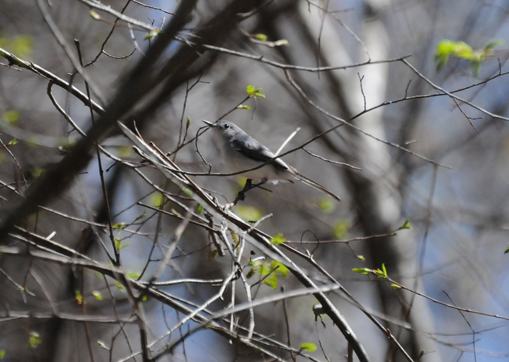
Around the boardwalk and especially in the parking area, birds are busy fueling for their flights north or they are busy setting up breeding territories here.  Blue-gray Gnatcatchers singing in addition to their usual "speee" call.

Blue-gray Gnatcatcher - Mark Musselman

Black-and-white Warbler - Mark Musselman

Female Yellow-rumped Warbler - Mark Musselman

Downy Woodpecker - Mark Musselman
Yellow-throated Warblers and Northern Parulas are singing and a White-eyed Vireo and a Common Yellowthroat were heard for the first time this year.  Finally, Prothonotary Warblers will be arriving within the week!

Monday, March 18, 2013

Help Find Rusty Blackbirds

You can help scientists prepare for the retooled Rusty Blackbird Winter Blitz in 2014 by identifying habitats containing Rusty Blackbirds from March through April 2013.

More details at eBird here.

We have seen Rusty Blackbirds at the Audubon Center at Francis Beidler Forest and multiple times along the nature trail at Ashley Ridge High School (ARHS).  See the blog entry here.

Male Rusty Blackbird - Mark Musselman
Female Rusty Blackbird - Mark Musselman

The Francis Beidler Forest contains 17,000 acres of cypress-tupelo swamp (1800 acres of old-growth), but the swamp at ARHS is less than 15 acres.  Therefore, do not feel that a stand of flooded forest near you is too small to warrant an investigation!

Friday, March 15, 2013

Wild Turkey

South Carolina's wild turkey season begins today.  As we have posted previously, the wild turkeys in and around the Audubon Center at Francis Beidler Forest were caught in the Francis Marion Forest in 1987 and released here.

Wild Turkey - Mark Musselman
In the images above taken on 3/11/2013, the males can be seen trying to impress the females and intimidate the other males.  The urge to compete may lead males to right to a hunter posing as a rival.  We have enjoyed our morning and evening sightings of wild turkeys, but suspect that they will be keeping their heads down for the near future.

Thursday, March 14, 2013

Dwarf Trillium

Dwarf Trillium (Trillium pusillum) has begun to bloom at the Audubon Center at Francis Beidler Forest.  No flowers can be seen from the boardwalk, but plants have emerged from the leaf litter near the boardwalk and will be blooming soon.  Here are entries from years past.

Dwarf Trillium - Mark Musselman
Dr. Richard Porcher began studying the Dwarf Trillium after Hurricane Hugo opened the forest canopy above the plants, which precipitated a spike in the trillium population.  Currently, Dr. Danny Gustafson of The Citadel is studying the Dwarf Trillium and annually brings his ecology class to Beidler Forest to collect data.

Camouflaged Data Collectors - Mark Musselman
A downward trend in the species' population has been detected as the canopy has begun to fill.  In order to help this rare plant maintain or increase its population, we will be conducting some selective pruning in and around the study plots.  We will trod lightly as not to trample any plants or any ants that serve as seed dispersers.  The trillium seeds have nutrient rich appendages, called elaiosomes, which the ants eat once they have carried the seed back to their nest.  Housecleaning throws the unharmed seed out with the trash and new Dwarf Trillium colonies can begin some distance from their parent plants.

Mutualism, ask your kids or a friend's kids, is at work.  The ants benefit, the trillium benefits, and we benefit by being able to see a rare plant right in our figurative backyard.

Tuesday, March 12, 2013

Hiring for Education Manager Position

Position Description

Location:
Audubon Center at Francis Beidler Forest

Immediate Supervisor:
Michael Dawson

Purpose of the position:

The EDUCATION MANAGER plans, creates and supervises the day to day operation of the full spectrum of educational offerings available both at and away from the Audubon Center at Francis Beidler Forest. He/She will pay particular attention to the Center’s alignment with National Audubon’s Strategic Plan.  He/She will also assist the Center Director with Beidler Forest Sanctuary management and protection, as well as State Office support as needed.

Essential Functions:

1.  To oversee and supervise the day-to-day development, implementation, and delivery of a wide variety of general visitor educational activities which are designed to bring people and the resources/facilities of the sanctuary together for positive experiences and move them along the continuum from understanding to appreciation to conservation action.

2.  To oversee and supervise the development, implementation and delivery of a curriculum of educational programming created for school children that is tied directly to state Education Standards, while contributing to Audubon’ Strategic Plan and conservation outcomes.

3.  Participate as a member of a team to conduct education and cultivation activities for key constituencies such as private landowners and foresters.

4.  To respond to National Audubon’s lead on aligning Center activities to its strategic plan and to develop, implement and deliver programs and projects in support of the Plan’s conservation outcomes. Particular attention will be paid to the Bird Friendly Communities goals and objectives.

5.  Take responsibility for the scheduling, pre/post information, guide/speaker assignment, etc. for all guided programming and off site outreach for the Beidler Forest.

6.  To create, plan, promote and conduct special events, walks, and programs designed to encourage visitation and participation at the Center.

7.  Build and maintain the Beidler Forest pages of the Audubon South Carolina website, assuring its current content, “tourist friendliness” and teacher usefulness.

8.  Assist the Center Director in the recruiting, training, scheduling, recognizing and keeping of volunteers to the Center. Assist the Center Director in the recruiting, training and scheduling of Seasonal Naturalists in the spring and fall.

9.  To serve as the principal "go to" staff member for all things bird related (identification, biology, monitoring, etc.) out of the Beidler Forest office, as well as assisting the state team in conducting Bird Friendly Bottomland Forest Management site visits, grassland/shrubland bird studies, and assisting with the shore bird Beach Stewards program.

10.  To act as part of the Audubon South Carolina team, endeavoring to achieve its conservation outcomes as addressed in National Audubon’s Strategic Plan.

Additional Functions:

1. Assist Center Director and/or Land Manager as needed with sanctuary facilities and equipment maintenance, biological monitoring and field biology/research.

2. Run the visitor center desk one weekend per month.

3. Plan, promote and conduct a series of at least three weeks of summer day camps for area children with themes and activities in support of Strategic Plan Conservation Outcomes.

Relationships:

Internal:
Center Director
State Office Director
Development Director
Office Manager
Finance Manager
Seasonal Naturalists
Land Manager
Volunteers
Part-time staff
NAS Centers and Education Staff

External:
Area teachers
Area school administrators
Staff from other education providers
Sanctuary neighbors
Staff from other area non-profits, governmental agencies, resource or educational organizations
Local media
Local Civic and Service Clubs

Equipment: (e.g., computer, typewriter, calculator, copy machines, telephone, etc.)

Computer, copy machine, GPS unit, digital camera, hand power tools and other maintenance equipment, canoe/kayak, video projector. Trucks (some with standard shift).
Qualifications: (e.g., education, training, experience, licenses and skills)

Minimum of a Bachelor’s degree in Biology, one of the Natural Sciences, or Education and previous experience as a Naturalist. Demonstrated passion for birds at a minimum and experience with avian research/monitoring would be a plus. Familiarity with promotions, good writing and public speaking skills, and sense of humor. Demonstrated ability to self start and work with little supervision.

Physical Requirements: (e.g., lifting, reaching, climb, push/pull, etc.)

Must be able to routinely walk the 1.75 mile boardwalk.
Must be able to canoe or kayak.
Must be able to lift 50 lbs. or more.
Must be able to reach, push a garden cart, wield a machete or bush ax, and accomplish
other fairly physical tasks..
Must be able to tolerate the heat and humidity of a South Carolina summer while outside
for hours at a time.
Must be able to endure bugs (especially chiggers, yellow flies, occasionally mosquitoes)

Application:

Applicants MUST apply through the Audubon Career Center at the following link…
https://careers-audubon.icims.com/jobs/1679/job?mode=view

Wednesday, March 06, 2013

2013 Summer Camp

The Audubon Center at Francis Beidler Forest has announced the 2013 summer camp dates!

There is a choice of three week-long summer day-camps during June. Francis Beidler Forest contains the largest remaining stand of virgin, cypress-tupelo swamp in the world. This is the perfect setting for stimulating a child’s love for nature!

Campers listening to bird song - Mark Musselman

Birds will be the 2013 theme to guide campers through each week.  Campers will become amateur naturalists themselves by engaging in science, hands-on activities and arts.  You can view images from last year here.

A tentative schedule can be viewed here and an enrollment form can be downloaded here.

The programs for the summer camp are geared for grades 1 through 6. The camp day will last from 9:00 am until 2:00 pm at a cost of $85. Please call Beidler Forest at 843-462-2150 to secure a place for your child in the week of your choice.

The dates for the 2013 summer camp will be:
Session I: June 10-14
Session II: June 17-21


Previous advanced campers - Mark Musselman
For older campers, we will once again host an advanced camp.

Advanced Swamp Camp
For the third year, the Audubon Center at Francis Beidler Forest is offering a day-camp for teenagers (ages 13-16) from 9:00 am until 2:00 pm June 24-28. The cost is $100 per camper. Campers will spend the days outside exploring the various habitats throughout the sanctuary. Those unwilling to stomp in the swamp getting wet and dirty should not apply.  Activities will include GPS navigation, canoeing, wildlife identification, and whatever we encounter!  Explore this GIS map to see where campers went and what they saw in 2012!

Limit: 15 campers. Call Beidler Forest at 843-462-2150
  

Tuesday, March 05, 2013

2013 Wine & Warblers


 It is almost time for Wine and Warblers!

On April 20th, join expert birdwatchers for an evening on the boardwalk and explore the wide variety of songbirds that travel to Beidler Forest each spring. Enjoy hors d'oeuvres and wine tastings as you explore the ancient swamp forest.


Proceeds benefit Audubon South Carolina and the cost is $40 per person. Reservations and advance payment are required. Walks begin at 5:00 p.m. and depart each half hour.  Please make reservations for your time slot by calling (843) 462-2150.

Click here for additional images and descriptions of past years' Wine & Warblers!

Warbler species will begin arriving this month with the Prothonotary Warblers returning on one of the last days of the month.  In the meantime, here is a sample of what has been around the boardwalk in the last week:

Francis Beidler Forest Audubon Center and Sanctuary, Dorchester, US-SC
Feb 25, 2013 10:00 AM
Protocol: Incidental
Comments:    overcast, 40Fs, repairing boardwalk
11 species

Wood Duck (Aix sponsa)  4
Red-bellied Woodpecker (Melanerpes carolinus)  1
Yellow-bellied Sapsucker (Sphyrapicus varius)  3
Northern Flicker (Colaptes auratus)  1
Pileated Woodpecker (Dryocopus pileatus)  2
American Crow (Corvus brachyrhynchos)  3
Tufted Titmouse (Baeolophus bicolor)  2
Carolina Wren (Thryothorus ludovicianus)  1
Hermit Thrush (Catharus guttatus)  1
Yellow-rumped Warbler (Setophaga coronata)  6
Northern Cardinal (Cardinalis cardinalis)  2


Francis Beidler Forest Audubon Center and Sanctuary, Dorchester, US-SC
Feb 26, 2013 2:20 PM - 4:15 PM
Protocol: Traveling
1.75 mile(s)
Comments:    Overcast to clear, windy, 60Fs
20 species

Red-shouldered Hawk (Buteo lineatus)  3
Barred Owl (Strix varia)  2
Red-bellied Woodpecker (Melanerpes carolinus)  5
Yellow-bellied Sapsucker (Sphyrapicus varius)  2
Downy Woodpecker (Picoides pubescens)  5
Northern Flicker (Colaptes auratus)  2
Pileated Woodpecker (Dryocopus pileatus)  3
American Crow (Corvus brachyrhynchos)  8
Carolina Chickadee (Poecile carolinensis)  4
Tufted Titmouse (Baeolophus bicolor)  2
Winter Wren (Troglodytes hiemalis)  3    Saw at #105, #165, and #169
Carolina Wren (Thryothorus ludovicianus)  9
Ruby-crowned Kinglet (Regulus calendula)  2
Hermit Thrush (Catharus guttatus)  2
American Robin (Turdus migratorius)  1
Yellow-rumped Warbler (Setophaga coronata)  2
Yellow-throated Warbler (Setophaga dominica)  1
White-throated Sparrow (Zonotrichia albicollis)  1
Northern Cardinal (Cardinalis cardinalis)  1
American Goldfinch (Spinus tristis)  2

Francis Beidler Forest Audubon Center & Sanctuary, Dorchester, US-SC
Feb 27, 2013 1:55 PM - 2:10 PM
Protocol: Stationary
Comments:    Partly cloudy, 60Fs, parking area
15 species

Turkey Vulture (Cathartes aura)  1
Red-bellied Woodpecker (Melanerpes carolinus)  1
Yellow-bellied Sapsucker (Sphyrapicus varius)  1
Downy Woodpecker (Picoides pubescens)  1
Eastern Phoebe (Sayornis phoebe)  1
American Crow (Corvus brachyrhynchos)  2
Carolina Chickadee (Poecile carolinensis)  2
Tufted Titmouse (Baeolophus bicolor)  1
Brown Creeper (Certhia americana)  1  (and again yesterday)
Carolina Wren (Thryothorus ludovicianus)  1
Blue-gray Gnatcatcher (Polioptila caerulea)  1
Ruby-crowned Kinglet (Regulus calendula)  3
American Robin (Turdus migratorius)  4
Pine Warbler (Setophaga pinus)  1
Yellow-rumped Warbler (Setophaga coronata)  1

Monday, March 04, 2013

Prescribed Burning

After the rain during the previous weeks, last week turned out to be a good week to burn with the season drawing to a close.  At Audubon's Francis Beidler Forest, we were able to burn two tracts, as was the Charleston Audubon and Natural History Society at their McAlhaney Nature Preserve.  Charleston Audubon posted images and descriptions of the procedures and goals for their burning.

As we have noted in previous posts, the main purpose of burning forest land is to reduce the fuel load and prevent disastrous wildfires like the one near Myrtle Beach four years ago.  Whether by lightning or careless human activity, forests will burn at some point.  Not only does less fuel equal a less intense fire, some ecosystems, like the Longleaf Pine savanna, have evolved with periodic fire and require fire to maintain their health.

The first site we burned was the Longleaf Pine restoration tract we planted in January 2007.
Longleaf restoration site preburn - Mark Musselman
Longleaf restoration site (wiregrass) preburn - Mark Musselman
It appears that fire is essential for production of viable seed by these plants. Wire grass may actually be the most important, if not the most obvious, species in a longleaf pine savanna, because it is the plant that produces most of the fuel for the fires that sustain the community. Longleaf pines themselves do not produce enough fuel to keep their “home fires” burning. If it weren’t for wire grass and the fires it sustains, the savannas would cease to exist. That is exactly what happens when fire is suppressed in these communities. -- Carolina Environmental Diversity Explorations

Starting fire with drip torch - Mark Musselman
Drip torches containing a 4:1 mixture of diesel to gasoline were used to set the fire on the downwind side of the stand, which allowed the fire to burn into the wind at a slower, steadier pace than if the fire were started on the upwind side of the stand.
Burning into wind - Mark Musselman
A fire break was plowed around the entire stand to ensure the fire did not migrate beyond the stand's boundaries and interior dirt roads allowed the stand to be burned in seven separate sections.  However, in the event that fire were to find a way across a break, volunteers were ready to extinguish the flames by smothering the fire with flappers or shoveled soil or by spraying the errant fire with water.
Volunteers Howard Bridgman and Paul Cooler - Mark Musselman
Although ascetically unattractive immediately after the burn, wiregrass and forbs will quickly begin to sprout producing an enhanced habitat for wildlife like wild turkeys, bobwhite quail, and fox squirrels.  Longleaf Pine benefit from the elimination of competing hardwood tree species and the reduction of fuel on the ground, which if allowed to accumulate could generate a fire too hot for the Longleaf Pines to withstand.

Longleaf restoration site postburn - Mark Musselman

The next day we burned a Loblolly Pine stand at the northern end of the Francis Beidler Forest.  The 37 acres were divided by fire breaks into three unequal units.  We began with the smallest (3 acres) to see how the fire would travel through the stand.  The fire burned slowly into the gentle west wind.

Loblolly Pine stand preburn - Mark Musselman
Recent rains kept the site moist and east-west running furrows between the rows of planted pine kept the fire from burning south to north.
Loblolly Pine stand preburn - Mark Musselman
Loblolly Pine stand slowly burning - Mark Musselman
Fire burned slowly and steadily where not stymied by standing water.

Loblolly Pine stand slowly burning - Mark Musselman
In the end 75-80% of the fuel was burned across the site.  In drier areas, the burn rate was 100%, while other areas (image below) did not burn in the low, wet areas.

Loblolly Pine stand postburn - Mark Musselman

Both burns successfully accomplished our goal of fuel reduction and exceeded our expectations considering the moist conditions.  However, hazards remain until all the hot spots are extinguished and all of the equipment is properly stored back at the center.  There is little room for error when driving the ATV up the ramp into the bed of the pickup.  Pushing the accelerator lever instead of gripping the brake lever results in spectacular damage to the toolbox and quality entertainment for the bystanders.  To quote Homer Simpson, "Doh!"

ATV vs toolbox - Mark Musselman

Friday, February 22, 2013

2012 Nature Photography Contest Winners


Audubon South Carolina Announces Winners in
2012 Nature Photography Contest


Audubon SouthCarolina is pleased to announce the winners of the 2012 Audubon South Carolina Nature Photography Contest, co-sponsored by the Carolinas’ Nature Photographers Association.
The contest invited photographers to capture the beauty of the natural world at one of South Carolina’s two Audubon Sanctuaries: Francis BeidlerForest (Harleyville) and Silver Bluff(Jackson), as well as any other natural habitat in South Carolina. Over 40 entries were submitted by participants from across South Carolina. 

Contest Winners - Nancyjean Nettles
“BEST in SHOW Award” was won by Raymond Colin Murray of Charleston, SC, for “Taking Flight,” featuring a Barred Owl flying directly toward the photographer.
First Place, Wildlife: Catherine Miller (Charleston, SC) for  “Parenting Pause”
First Place, Plant/Landscape: Mary Presson Roberts (Tega Cay, SC) for “Leaf Reflection
                                                           
Second Place, Wildlife: Raymond Colin Murray (Charleston, SC) for Skimming the Shore”
Second Place, Plant/Landscape:  Sherry Schumann (Monck’s Corner, SC) for “Autumn Walk”

Third place, Wildlife: Sparkle Clark (Columbia, SC) for “Food for the Nestlings”
                      Wildlife: Marian Davis (Columbia, SC) for “Sphinx Moth Caterpillar
Third place, Plant/Landscape: Joanne Wuori (Columbia, SC) for “Spring Morning”
                      Plant/Landscape: Mary Presson Roberts (Tega Cay, SC) for “Forest of Green”


A generous anonymous donor provided cash awards totaling more than $1,000 for the winners.
The winning photographs will be on display for several weeks at the Summerville Visitor Center at
402 N. Main Street.

Sunday, February 17, 2013

Rain, Rain, Save the Day

It was beginning to look like there would not be any canoe trips at the Audubon Center at Francis Beidler Forest due to the minimal rain since August 2012.  With yesterday's rain on top of the rain last week, that is no longer an issue.  In fact, two groups were on the canoe trail yesterday.  The morning group beat the rain and the drop in the temperature, but the afternoon group did not fair as well.  It was still a beautiful paddle, but hot beverages and maybe a warm fire were on most of the post-paddle schedules.

Last Tuesday, we took advantage of the "eye of the storm" to make a quick walk around the 1.75-mile boardwalk.  We quickly spied a Spotted Turtle (Clemmys guttata) and a Common Snapping Turtle (Chelydra serpentina), both likely in search of mates.

A shower of Red Maple debris greeted us early along the boardwalk.  Gray Squirrels (Sciurus carolinensis) are messy eaters.
Red Maple seeds on boardwalk - Mark Musselman
Depressions in the upland areas created by Hurricane Hugo-felled trees filled with water.  Amphibians will use these ephemeral, fish-free pools for breeding.  You may have heard the chorus of frog calls in your neighborhood too.

Upland forest - Mark Musselman
Elsewhere, water has reached even the elevations where the Dwarf Palmetto grows.

Swamp - Mark Musselman
Water flowing by knees - Mark Musselman
If you stand near the fork (#115) on the boardwalk, you will likely hear what appears to be the roar of a mountain stream.  Obviously, that is not the case here in the nearly level coastal plain. What you will be hearing is the cumulative noise of water flowing over the quarter mile of beaver dam.  The log near #154 that skims debris floating on the water's surface is also close to being overtopped.

Log across channel - Mark Musselman

We saw plenty of birds that were also taking advantage of the break in the rain.

Francis Beidler Forest Audubon Center & Sanctuary, Dorchester, US-SC
Feb 12, 2013 1:55 PM - 3:55 PM
Protocol: Traveling
1.75 mile(s)
Comments:     Mostly cloudy, 60Fs
25 species

Wood Duck (Aix sponsa)  2
Great Blue Heron (Ardea herodias)  1
Turkey Vulture (Cathartes aura)  1
Red-shouldered Hawk (Buteo lineatus)  2
Barred Owl (Strix varia)  3
Red-bellied Woodpecker (Melanerpes carolinus)  9
Yellow-bellied Sapsucker (Sphyrapicus varius)  4
Downy Woodpecker (Picoides pubescens)  5
Northern Flicker (Colaptes auratus)  3
Pileated Woodpecker (Dryocopus pileatus)  4
Eastern Phoebe (Sayornis phoebe)  1
American Crow (Corvus brachyrhynchos)  11
Carolina Chickadee (Poecile carolinensis)  10
Tufted Titmouse (Baeolophus bicolor)  12
Brown Creeper (Certhia americana)  1
Winter Wren (Troglodytes hiemalis)  2
Carolina Wren (Thryothorus ludovicianus)  7
Blue-gray Gnatcatcher (Polioptila caerulea)  1
Golden-crowned Kinglet (Regulus satrapa)  6
Ruby-crowned Kinglet (Regulus calendula)  9
Hermit Thrush (Catharus guttatus)  3
Black-and-white Warbler (Mniotilta varia)  1
Pine Warbler (Setophaga pinus)  1
Yellow-rumped Warbler (Setophaga coronata)  20
American Goldfinch (Spinus tristis)  6

At #7, an Eastern Cottonmouth (Agkistrodon piscivorus piscivorus) took the opportunity to catch some sun atop the log it uses for its winter den.

Eastern Cottonmouth - Mark Musselman
Beaver gnawing on Sweet Gum - Mark Musselman

Approaching Goodson Lake, evidence of fresh beaver (Castor canadensis) foraging could be seen on numerous trees and knees.  Like many of us, we're sure the beavers are looking forward to the warmer, sunnier weather of spring.  However, unlike the beavers, we do not need to worry that the warming temperatures allow the alligator (Alligator mississippiensis) to feed once more.

Saturday, February 16, 2013

2013 Great Backyard Bird Count Day1

Did you count any birds in your yard or neighborhood in support of the Great Backyard Bird Count?  If you didn't, why not?  It's easy!  There are still two more days after today.

Yesterday, we were at Middleton Place and here is some of what we saw on day #1:

American Coot - Mark Musselman
Common Gallinule - Mark Musselman
Double-crested Cormorant eating fish - Mark Musselman
Wood Stork - Mark Musselman

Middleton Place, Dorchester, US-SC
Feb 15, 2013 3:25 PM - 4:50 PM
Protocol: Traveling
1.25 mile(s)
Comments:    Clear, 60s
27 species

Mute Swan (Cygnus olor)  2
Wood Stork (Mycteria americana)  1
Double-crested Cormorant (Phalacrocorax auritus)  26    <
Great Blue Heron (Ardea herodias)  1
Great Egret (Ardea alba)  1
Snowy Egret (Egretta thula)  2
Tricolored Heron (Egretta tricolor)  1
White Ibis (Eudocimus albus)  4
Black Vulture (Coragyps atratus)  6
Turkey Vulture (Cathartes aura)  5
Common Gallinule (Gallinula galeata)  6
American Coot (Fulica americana)  3   
Ring-billed Gull (Larus delawarensis)  1
Belted Kingfisher (Megaceryle alcyon)  1
Red-bellied Woodpecker (Melanerpes carolinus)  1
Pileated Woodpecker (Dryocopus pileatus)  1
Eastern Phoebe (Sayornis phoebe)  1
American Crow (Corvus brachyrhynchos)  5
Carolina Chickadee (Poecile carolinensis)  4
Tufted Titmouse (Baeolophus bicolor)  3
Carolina Wren (Thryothorus ludovicianus)  3
Ruby-crowned Kinglet (Regulus calendula)  4
Hermit Thrush (Catharus guttatus)  1
Pine Warbler (Setophaga pinus)  1
Yellow-rumped Warbler (Setophaga coronata)  10
Swamp Sparrow (Melospiza georgiana)  3
White-throated Sparrow (Zonotrichia albicollis)  6

Monday, February 11, 2013

Great Backyard Bird Count 2013


The annual Great Backyard Bird Count will be held during this coming weekend (Feb. 15-18).

The Great Backyard Bird Count is an annual four-day event that engages bird watchers of all ages in counting birds to create a real-time snapshot of where the birds are across the continent. Anyone can participate, from beginning bird watchers to experts. It takes as little as 15 minutes or longer, if one wishes, on a single day or on each day of the event. It’s free, fun, and easy—and it helps the birds.

Northern Mockingbird - Mark Mussselman
Participants count birds anywhere for 15 minutes or longer during the four-day period. They tally the highest number of birds of each species seen together at any one time. For example, if three robins are spotted in the yard, the count for robins would be three. Later, if a single robin is spotted in the yard, the count for robins would remain at three (most seen at one time) and not increase to four. Participants can report their counts by filling out an online checklist at the Great Backyard Bird Count website at http://www.birdsource.org/gbbc/.

As the count progresses, anyone with Internet access can explore what is being reported from their own towns or anywhere in the United States and Canada. They can also see how this year's numbers compare with those from previous years. Participants may also send in photographs, including a contest, of the birds they see. This is a tremendous opportunity for teachers to address science, social studies and math standards while helping scientists learn about birds in our hemisphere!

By knowing where the birds are, scientists and bird enthusiasts can learn much regarding the current state of birds. Bird populations are dynamic; they are constantly in flux. No single scientist or team of scientists could hope to document the complex distribution and movements of so many species in such a short time.

The GBBC is a citizen-science project where everybody’s help, no matter how small, is valuable. Help make sure the birds from our community are well-represented in the count. It does not matter whether a report is for five species on a backyard feeder or during a walk through the neighborhood or for 25 species spotted during a day's outing to the Audubon Center at Francis Beidler Forest.


There are plenty of ways to participate!  You do NOT need to be an expert on birds.

You can find tips here for counting birds, especially large flocks.

There is a poster of some common backyard birds here.

Facebook

Twitter using #GBBC