Showing posts with label amphibian. Show all posts

Tuesday, November 13, 2012

Master Naturalists Visit

Yesterday, the master naturalist class from the Lowcountry Institute on Spring Island visited the Audubon Center at Francis Beidler Forest.  What a difference a day makes!  A visit today, after the passing of the cold front, would not have produced the variety of wildlife sightings described below.

Upon entering the swamp, a Winter Wren (Troglodytes hiemalis) greeted us with a call as it flew inches off the ground between its inspections of decaying logs.  With the water level remaining low due to the lack of rain, we concentrated our wildlife searches around the few shallow creek channels.  Either the wildlife lives in the water or it eats something in the water.  We had our first hit along the channel near #5.  As we pointed out a frequently used deer trail, free of leaves and with fresh tracks embedded in the mud, a member of the group spotted an Eastern Cottonmouth (Agkistrodon piscivorus piscivorus) wedged low between two trees.

Eastern Cottonmouth - Mark Musselman
As photos were being taken, another member of the group spotted a second cottonmouth nearly obscured by a log off the other side of the boardwalk.  A brief walk to #8 and another cottonmouth was discovered basking on a log.

All was relatively quiet at Goodson Lake and around to #14, which is halfway back on the return loop.  Beyond #14, a Barred Owl (Strix varia) was spotted low on a branch a few meters left of the boardwalk.  For several minutes, the owl tolerated the group of twenty-five adults along with the "aahs" and clicking camera shutters.  Eventually, it flew to a slightly more distant perch and gave a brief hoot to let us know it was time to move along.

Barred Owl - Mark Musselman
As we turned, we spotted the owl's mate ahead of us on the hand rail.  The second owl attempted to catch something on the ground to the left of the boardwalk and then flew to a low perch next to the hand rail.  Again, the cameras came up as the model posed patiently for the art gallery shots.

Barred Owl - Mark Musselman

Barred Owl - Mark Musselman
Having not yet finishing discussing the fortuitous close encounters with the owls, we came upon a large Banded Water Snake (Nerodia fasciata fasciata) that appears to have sensed the cooling weather and has established a den near the fallen water hickory.
Collis Boyd repairing boardwalk - Mark Musselman
We continued on to the nature center for lunch and then made the short drive to the marl bluff along the southern edge of Mallard Lake.  The Six-lined Racerunners (Cnemidophorus sexlineatus) were absent this trip, but we did capture a young Southern Fence Lizard (Sceloporus undulatus) in the dry, sandy upland habitat.  A short walk down the steep slope, approximately 20' change in elevation, brought us to a seep.  Seeps form when rain peculates vertically through the soil until it reaches the impermeable layer of marl.  Water then travels laterally until emerging from the base of the slope in a narrow (5'-6') and short (20'-25') wetland.  The cool, permanent and fish-free water is prime amphibian, especially salamander, habitat.  We quickly located a Slimy Salamander (Plethodon glutinosus) and a Southern Two-lined Salamander (Eurycea cirrigera) before being distracted by a small, beautifully colored Eastern Cottonmouth.  The snake quickly retreated to its likely den in an exposed root mass and we moved away from the bluff to explore the dry swamp.

An immediate and somewhat satisfying find was the skull of a wild pig (Sus scrofa), a scourge we have discussed previously in this blog.  Note the gnawing by other wildlife, mainly rodents, as they seek to meet their calcium needs.  Stirring leaves and rolling a few logs produced a variety of frogs, including a Southern Cricket Frog (Acris gryllus), a Green Treefrog (Hyla cinerea) , and a Pine Woods Treefrog (Hyla femoralis) as well as a beautiful Marbled Salamander (Ambystoma opacum)!

Wild pig skull - Mark Musselman

Marbled Salamander - Mark Musselman

Marbled Salamander - Mark Musselman

Pine Woods Treefrog - Mark Musselman
Finally, before heading back up the bluff to the vehicles, Kelley Luikey snapped a photo of a richly colored Marbled Orbweaver (Araneus marmoreus).  With today's cool, breezy weather portending overnight freezes, these spiders will not be around much longer.

Marbled Orbweaver - Kelley Luikey

Wednesday, September 12, 2012

Unintended Habitat Enhancement

If you have ever been a property owner outside of town or know someone who is, you have likely seen surveyor's blazes and boundary line painting.  The blazes, surveyor chops in the tree trunk forming a distinctive scar, point to the boundary line or a corner (change of direction) and are painted by us to make them visual apparent.

Boundary marker - Mark Musselman
Audubon's Francis Beidler Forest has over 100 miles of exterior boundary lines in addition to internal boundary lines and all of them need to be painted to ensure that there is no confusion as to their location.  For example, a logger working a neighboring property needs to know when to stop cutting or hunters need to know when they are about to cross into the sanctuary.

Yesterday, while doing some boundary line painting, we discovered that the surveyor's blazes have enhanced the habitat for some of the forest creatures.  The vast majority of the blazes were covered with spider webbing, but several held resting amphibians.  The first to be discovered was a small Green Treefrog (Hyla cinerea) that was nearly skewered with a web-clearing machete.

Green Treefrog - Ricky Covey

Green Treefrog - Ricky Covey
The next treefrog, possibly a Squirrel Treefrog (Hyla squirella), got a dab of white paint before it was discovered.  A quick rinse from a bottle of water got it back to its natural color and on its way.  After two treefrogs in blazes, we were alert to the possibility and spotted the Gray Treefrog (Hyla versicolor) before it was in danger of being cut or painted.

Gray Treefrog - Ricky Covey
We also encountered some species that needed no habitat enhancement, but that caused us to enhance our own attire.  Although snake boots can get uncomfortable after a day of stomping through the forest, stepping on a Southern Copperhead (Agkistrodon contortrix contortrix) could certainly ruin a beautiful walk in woods!

Southern Copperhead - Ricky Covey

Southern Copperhead - Ricky Covey

Monday, November 28, 2011

Ripped From the Headlines!

The staff at the Audubon Center at Francis Beidler Forest hopes that everyone had a safe and wonderful Thanksgiving...everyone and every thing!


Image by Mark Musselman

While enjoying our days away from the swamp, we had extra time to peruse the printed and online news.  Here are a few noteworthy selections:

In a callback to our post from last week, we spotted an article by Bo Petersen in The Post and Courier regarding an award nomination of local conservationist George Rabb for his lifetime of work protecting wildlife and their habitats.  Why are frogs disappearing from the planet at an alarming rate?  Mr. Rabb can tell you.  "He drove research that identified a deadly skin fungus literally being carried frog to frog as local species were transported around the world. Because of that work, a global effort is under way to find ways to diffuse the crisis and conserve healthy captive species as a fallback."

Next, work continues with Ashley Ridge High School and the new nature trail. Last week, we were on campus to teach the basics of Global Positioning System (GPS) navigation.  Students quickly got the hang of the technology and found various objects like a manhole cover, a specific palm tree, white traffic arrows, and a bench.  All objects that could have been located with verbal directions, but it likely would have devolved into something akin to the old game of telephone.  With their newly acquired skills, students will be able to capture the coordinates of various locations along the nature trail, including wildlife sightings!  Using the data they collect, students will also be able to create their own maps.  You can read more about the day in the Summerville Journal Scene's article.


Images by Emily Cavell


Finally, "one of the world's rarest and most valuable books is out of the vault and on public view."  You can read the rest of Joann Loviglio's article regarding John James Audubon's "The Birds of America" in yesterday's Post and Courier.

Monday, November 21, 2011

Master Naturalist Visit

Last Monday, the participants in the Master Naturalist program at the Lowcountry Institute on Spring Island visited the Audubon Center at Francis Beidler Forest.  This time of year, wildlife along the boardwalk can be scarce.  Many of the birds have migrated to southerly locations, reptiles are less active and often hidden from sight, and deer are literally gun-shy.

During our walk around the boardwalk, we did see a variety of birds, Yellow-bellied Sliders (Trachemys scripta scripta) at the lake, a Greenish Rat Snake sunning on a tree branch, and this likely-born-this-year Eastern Cottonmouth (Agkistrodon piscivorus piscivorus) basking in a patch of sun next to the Yellow Popular (Liriodendron tulipifera) sign.


After lunch, we moved to the bluff near Mallard Lake to inspect the seeps and see what might be living in the those moist habitats.  While still above the bluff on the sandy, dry stretch, Tony Mills caught a male Fence Lizard (Sceloporus undulatus hyacinthinus) basking on a fallen log.  Note the vibrant blue on the lizard's belly and throat!


Under a log, we found a female Marbled Salamander (Ambystoma opacum) with her eggs.  Once the water level rises and floods the area, the eggs will hatch.  Elsewhere we found Southern Two-lined Salamander (Eurycea cirrigera), Three-lined Salamander (Eurycea guttolineata), and Slimy Salamanders (Plethodon glutinosus).


Finally, hopping across the leaf litter, we found what we are identifying as an Upland Chorus Frog (Pseudacris feriarum).  Variability in individuals makes this one tough to identify with only the image to examine.


Images by Mark Musselman

Wednesday, July 20, 2011

Advanced Camp - Day 3

The heat and humidity have returned to the swamp!  Day 3 of advanced summer camp at the Audubon Center at Francis Beidler Forest had campers soaking wet even though the swamp is nearly dry.

The plan for the day was to hunt for reptiles and amphibians during the morning and then insects within the sunny power line corridor after lunch.  Heat index values approaching 112F caused some modifications to the plan, including an early afternoon retreat to the air-conditioned nature center.

Here are some of the images captured during the day:

Very young Carolina Anole

Eastern Cottonmouth (only snake seen)


Early in the herp hunt

Appeared to be a young Bronze Frog

After some swamp stomping

Non-target spider species

 Dragonflies

Images by Mark Musselman

Monday, June 28, 2010

Summer Camp Session #2

On Friday, the second session of summer camp ended at the Audubon Center at Francis Beidler Forest.  Images from session #1 can be seen here.

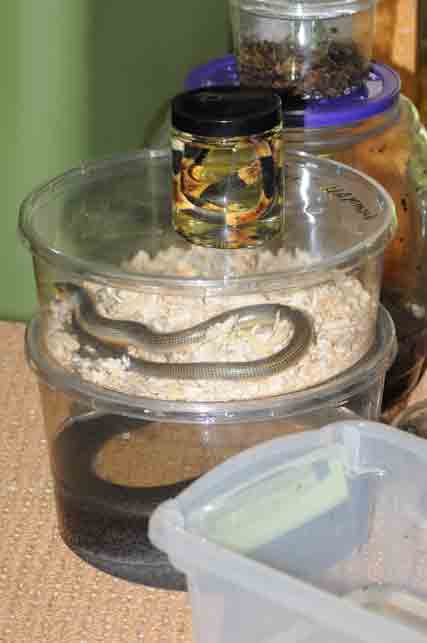
The order of events for the second session changed slightly due to Dennis Blejski's work schedule.  We had the herp identification activity after lunch on the first day.  We captured some of the specimens over the weekend, but found an Eastern Box Turtle and a Glass Lizard crossing roads on our way to work and a Southern Copperhead crossing the Beidler Forest driveway.  A couple of lizards around the picnic tables and we had a collection filling all 18 stations!


Southern Copperhead and Eastern Box Turtle


Southern Copperhead
Common Snapping Turtle
Corn Snake
Southern Leopard Frog
Three-lined Salamander
Gray Treefrog

Eastern Box Turtle
Southern Toad (toadlet)
Ground Skink
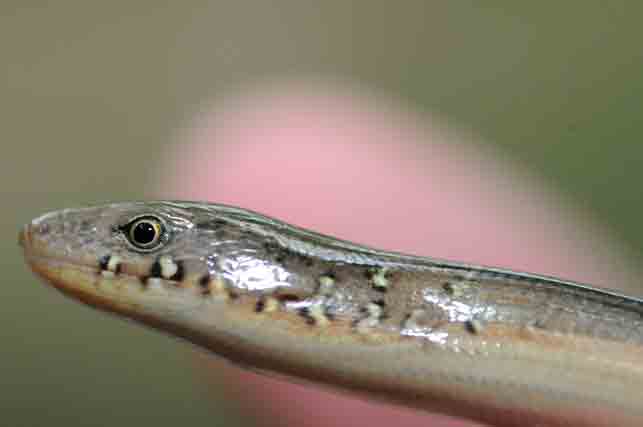
Glass Lizard
Southern Dusky Salamander
Southern Leopard Frog
Gray Treefrog

On Tuesday, we took our first trip around the boardwalk.  We are not the only creatures that choose not to move around when the heat and the humidity begin to soar!  Animal sightings were few.

Brown Water Snake
Barred Owl

After lunch on the second day, Dennis Blejski brought a collection of herps from his collection.


Bullfrog
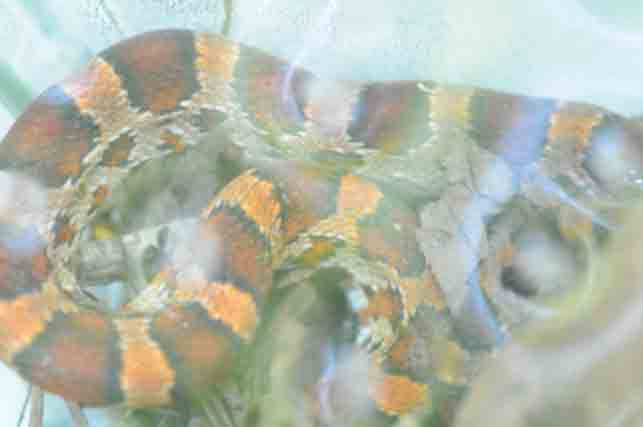
Scarlet Kingsnake
Diamondback Terrapin
American Alligator


Greater Siren

While off the boardwalk, we saw a variety of animals, but the magnificently-camouflaged Southern Copperhead was the highlight of the walk!


Centipede
Millipede
Southern Copperhead

Although amphibians are secretive and sunny, hot days are not the best conditions for finding them, campers did use their newly-learned frog call skills to identify various singing treefrogs.  We also nearly stepped on a Marbled Salamander while checking our minnow traps behind the outdoor classroom.


Marbled Salamander


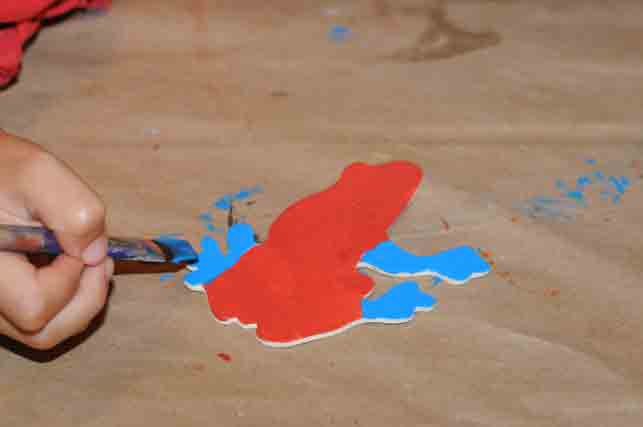
Throughout the week, campers also created various herp-related art items.


Camp ended on Friday with a herpathon along the boardwalk, lunch with families, and the presentation of diplomas and a CD of the week's images and sounds.  Appropriately, a Southern Black Racer moved through the picnic area to help close out the week of herps.

Southern Black Racer

The final session begins the third week of July.  Let's hope the herps don't get a summer vacation!

Images by Mark Musselman