Check out the education department calendar to see what days are still open for school visits.
Thursday, March 29, 2007
Westview Elementary
Check out the education department calendar to see what days are still open for school visits.
Wednesday, March 28, 2007
SCE&G and Vance Elementary School

South Carolina Electric and Gas hosted Vance Elementary School at the unveiling of the SCE&G Outdoor Classroom at the Audubon Center at Francis Beidler Forest. Scana also sponsors the after-school program at Vance Elementary School. Tuesday, March 27, 2007
Silver Bluff Coach & Carriage Drive
This special day was hosted by Jack Wetzel as a fundraising event for the sanctuary. Many spectators paid for the privilege of attending to observe the carriage driving, participate in bird and natural history walks, watch raptor demonstrations, and enjoy a delicious lunch – complete with chocolate riding boots for dessert!
Monday, March 26, 2007
CPR Training
The dragonfly in the other image is also working on its circulation. It has recently emerged from its life as an underwater macroinvertebrate and is preparing to begin its life as an adult. Its wings have not yet filled and stiffened to their flight-ready horizontally-extended position.
Thursday, March 22, 2007
Silver Bluff Trail Ride
Wednesday, March 21, 2007
Charleston AFB Conservation Day

Tuesday, March 20, 2007
Red Hat Society
Monday, March 19, 2007
Summer Camp


The group in the image are getting a close look at the fawn in the other image.
June 25-29, 2007
July 9-13, 2007
Friday, March 16, 2007
Coach & Carriage Ride at Silver Bluff
The 2007 Audubon Coach & Carriage Drive at Silver Bluff Sanctuary near Aiken features a day in Nature offering a variety of activities. Observe the Coach & Carriage drivers prepare their rigs and then view the array as they make their way along the 6+ mile forested trail. Guided birdwalks and live Raptor demonstrations will be ongoing. Attendees will also enjoy a sumptuous lunch at 1:00 pm, catered by the Green Boundary Club.
Thursday, March 15, 2007
A.W.O.L.

Wednesday, March 14, 2007
Maintenance
Monday, March 12, 2007
Great Backyard Bird Count Results

Friday, March 09, 2007
Spotted Turtles
When you visit the Francis Beidler Forest, you can learn more about the Spotted Turtle by interacting with the touch-screen display in the nature center. The display and previous Spotted Turtle research at the Francis Beidler Forest were sponsored by Santee Cooper, which owns the powerline that cuts across Four Holes Swamp and provides critical basking sites for the turtles.
Jackie Litzgus studied Spotted Turtles for four years here at Beidler Forest. She grew up in southern Ontario, Canada and has been studying Spotted Turtles since a chance encounter in 1991 while working as a biology instructor at a canoe trip camp. In the Bug House, the name given to the shed that housed the camp’s equipment, Jackie discovered a moldy binder of forgotten research data for Spotted Turtles dating back to 1977. Jackie was fascinated and immediately set out to see if she could find any of the individual turtles in the nearby pond. She did and she was hooked!
As an undergraduate from University of Guelph, Jackie began studying the Spotted Turtles in the Ontario area (45N 06’, 80W 04’), which led to her Master’s degree on the subject from the same university. In Canada, the Spotted Turtle is listed as an endangered species. Jackie’s 29 years of data constitute the longest running data set for the species on the planet.
Having studied the Spotted Turtles at the northern extent of their range, Jackie began looking for suitable sites to study at the southern extent of their range. Florida was eliminated as a possibility, since there no longer exists a large or healthy population of Spotted Turtles. Jackie’s four-year study at the Francis Beidler Forest site, which led to her Ph.D. from the University of South Carolina, began at the suggestion of herpetologists in our state. Jackie is now back in Ontario as a professor studying turtles.
"It was an amazing experience. Beidler Forest is a herpetologists dream…all the reptiles. It’s spiritual among the trees."
--Jackie Litzgus
We couldn't agree more!
Monday, March 05, 2007
Snapping Turtle
Friday, March 02, 2007
Noisette Creek Monitoring

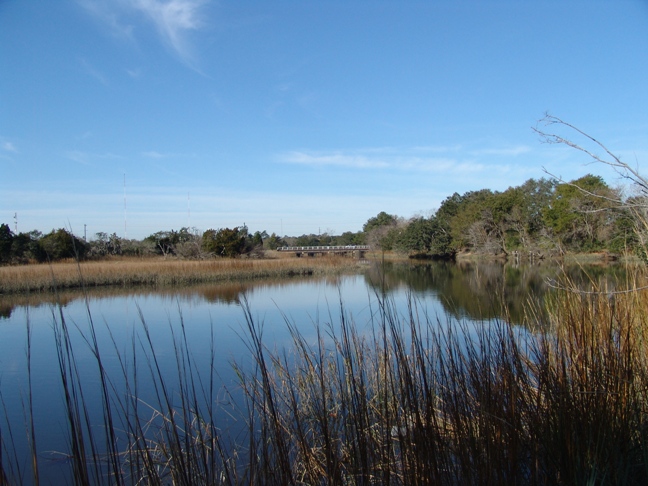
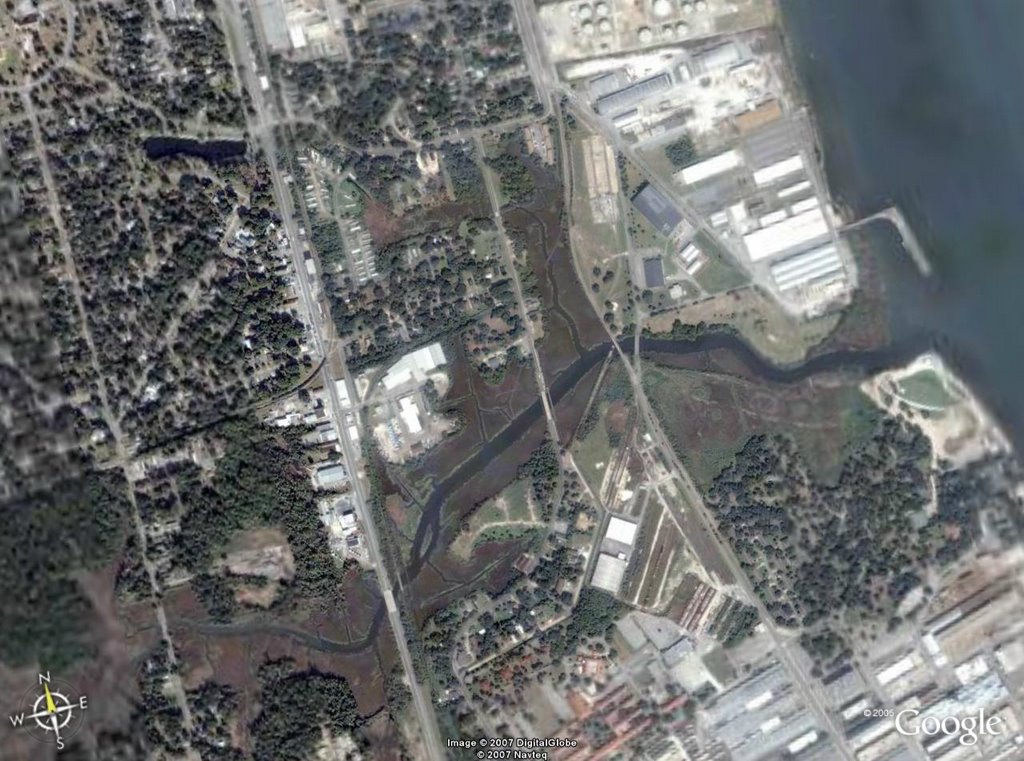
In the image, Noisette Creeks runs generally from west to east and empties into the Cooper River. A portion of Park Circle can be seen in the upper left corner. The northern portion of the former Naval Base straddles Noisette Creek and portions of the old golf course form the boundaries of the creek at its Cooper River end. The portion of the old golf course south of the creek will be returned to its former state as a marsh.
Thursday, March 01, 2007
Seasonal Naturalists
Wednesday, February 28, 2007
Who is that in the chimney?
Monday, February 26, 2007
Hilton Head Island
The presentation was followed by a bird walk to view the new signs and of course, look for birds. We birded the park's wooded areas and then on to the Port Royal Sound's mud flats at Fish Haul Creek. We concluded our trip with a visit to the nearby new Michelville Beach Park dedicated just last month.
The group found a total of 44 species of birds. The bird of the day was a Prairie Warbler, not usually seen here until later in the spring when it migrates here for the summer.
Other good birds seen by the group included: American Oystercatcher, Black Skimmer, Marbled Godwit, Short-billed Dowitcher, Forster's Tern, Bonaparte's & Herring Gulls, Clapper Rail (heard), Black Bellied Plover, Rudy Turnstone, Red-shouldered Hawk, White Ibis, Willet, Fish Crow, Boat-tailed Grackle, Ruby-crowned Kinglet, Tree Swallow, Cedar Waxwing, Downy Woodpecker and the common Rooster (heard) plus other common species.
It was a very good outing enjoyed by all.
Good Birding,
Jack C.
HHI, SC
Friday, February 23, 2007
Canoeing

Wednesday, February 21, 2007
Great Day for Ducks!
Since the time the images were taken, it has only rained harder. The snake has retreated into the stump as if to say, "It's a great day for ducks, but nothing else!"
Conservation Lobby Day

GPS and Field Experiences

Thursday, February 15, 2007
Great Backyard Bird Count

Wednesday, February 14, 2007
Kiwanis of Summerville

Beginning next month, the neotropical migratory songbirds will be returning from their winter ranges in Central and South America. It's a great time to come for a visit! However, birds are not the only organisms to migrate. The Monarch butterfly (Danaus plexippus) also makes the journey to and from Central America. The image shows a male stopping for a meal on goldenrod growing at the end of the driveway.
Tuesday, February 13, 2007
Audubon South Carolina - Google Earth

Saturday, February 10, 2007
Continuing Education

Friday, February 09, 2007
Family Science Night
Wednesday, February 07, 2007
Appressed Bog Clubmoss
Saturday, February 03, 2007
Florida Whooping Cranes

Friday, February 02, 2007
Audubon South Carolina Advisory Board
Prior to the meeting, ASC Executive Director Norman Brunswig took the board on a field trip to the recently planted Longleaf Pine (Pinus palustris) tract (see blog entry on Dec. 21, 2006 and Jan. 4, 2007). Along the edge of the property in the soggy remnants of an old road were several Red Pitcher Plants (Sarracenia rubra) shown in the image. These carnivorous plants attract insects into the rolled up leave by secreting a nectar-like substance. A waxy substance in the inner leaf makes the footing unstable and with downward pointing hairs it is nearly impossible for an insect to escape. A portion of the leaf acts as a lid to the tube-like portion, which prevents excess rain from falling into the tube and diluting the digestive secretions. Any insect falling into the digestive secretions diminishes the plant’s nutritional deficit, which is brought about by poor soils.
Thursday, February 01, 2007
Google Earth Files

Tuesday, January 30, 2007
Grassland For Birds

Audubon South Carolina plans to create perennial, warm-season grassland on 38 acres of newly acquired land on the Spring Branch tract. This grassland will be for the benefit of grassland bird species, specifically sparrows, buntings, bobwhite quail and other ground-nesting birds. Grassland habitat is diminished through conversion to agriculture, conversion to managed forest, and development.
The soils on the plot have been identified and a plan has been created for the grassland restoration. Today, staff from the Francis Beidler Forest used Global Positioning System (GPS) technology to plot the boundaries of the proposed grassland and to calculate the acreage (38 acres). The view in the image is from west to east.
Friday, January 26, 2007
Career Day

Each year, Summerville Elementary School invites parents to come and share their profession with the students. The image shows Mark Musselman, education director, discussing the Francis Beidler Forest and a career in environmental education with a class of students. Using a turkey leg, a Barred Owl's wing and talons, a turtle shell, a beaver skull, a snake skin, a deer skull, various digital images, and an alligator skull, Mark shared with the students the uniqueness of the virgin, old-growth swamp, the relationships of its inhabitants, and the importance of conserving natural areas before they disappear.
Except for live animals, there is little that can trump a hugh gator skull!
Thursday, January 25, 2007
Old Forest Roads

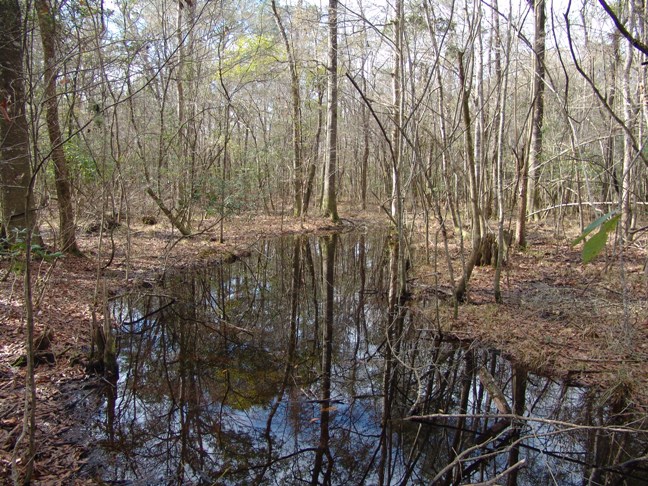
Although the original purchase of land for the Franics Beidler Forest contained almost 1800 acres of virgin, old-growth forest, the rest of Four Holes Swamp has been logged. Some logging roads were built out into the swamp. They remain and their effects, mainly the impediment to flowing water, are easily seen. Skidder tracks are harder to discern, except when rain water collects in the low areas (see image).
Elsewhere in our state and country, forest roads appear to have a negative effect even after they have been abandoned. Dr. Raymond Semlitsch, professor of biology at the University of Missouri, studied and reported (here and The Forestry Source, Dec 2006) the effect of forest roads on woodland salamanders. Plant ecologists have documented that road edges receive more sunlight and wind, which has a drying effect on the micro-climate. The study of marco- and micro-invertebrates near roads showed that the "road-effect zone" extended farther than the 35 meters Dr. Semlitsch determined for the salamanders. Since salamanders eat the invertebrates and prefer a cool, damp environment, the absence of food and suitable habitat would certainly have a negative effect on the salamanders.
"The big implication is that, not only do existing roads have effects that go beyond their roadside boundaries, but that these 80-year-old roads that have been abandoned have long-lasting effects, too," Semlitsch said. "So, if you're constantly laying down new roads, you're fragmenting the forest into smaller and smaller parcels." He suggested reusing forest roads, since the footprint has already been established.
Wednesday, January 24, 2007
Tourist in Your Town

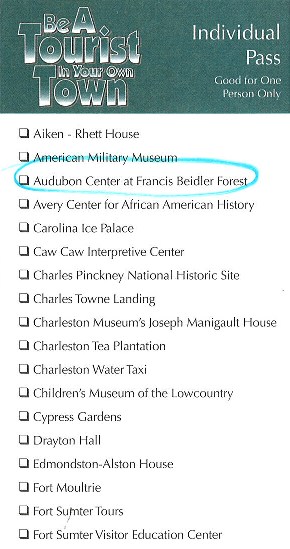
This month, over 150 Charleston area residents have taken advantage of the "Be a Tourist in Your Own Town" passes and visited the Audubon Center at the Francis Beidler Forest. The pass allows the bearer free access, as is the case at FBF, or discounts to encourage local residents to explore places of interest in our area. Not only is it possible that these local residents will return once they have discovered the unique beauty of the virgin, old-growth forest, but they are likely to share their discovery with friends and neighbors, especially out-of-town guests looking for a memorable experience.
Few people that have learned about FBF (that's where you can help!) and have made the effort to visit have departed unsatisfied with their experience in the swamp. Hopefully, the peace and beauty of the swamp have created 150 excited storytellers and future supports of Audubon's efforts in Four Holes Swamp.
Sunday, January 21, 2007
Bird Identification

The Francis Beidler Forest staff has installed a computer in the nature center to help visitors identify birds they have seen on the boardwalk or in their yard.
The Thayer birding software loaded on the computer contains 2,788 color photos and songs for 707 species. Visitors simply select the color, size, habitat, location or sound of their bird and the program will show them everything that matches their description.
"Do you know the name of that little brown bird?" could still be a challenge.
Friday, January 19, 2007
Water Quality

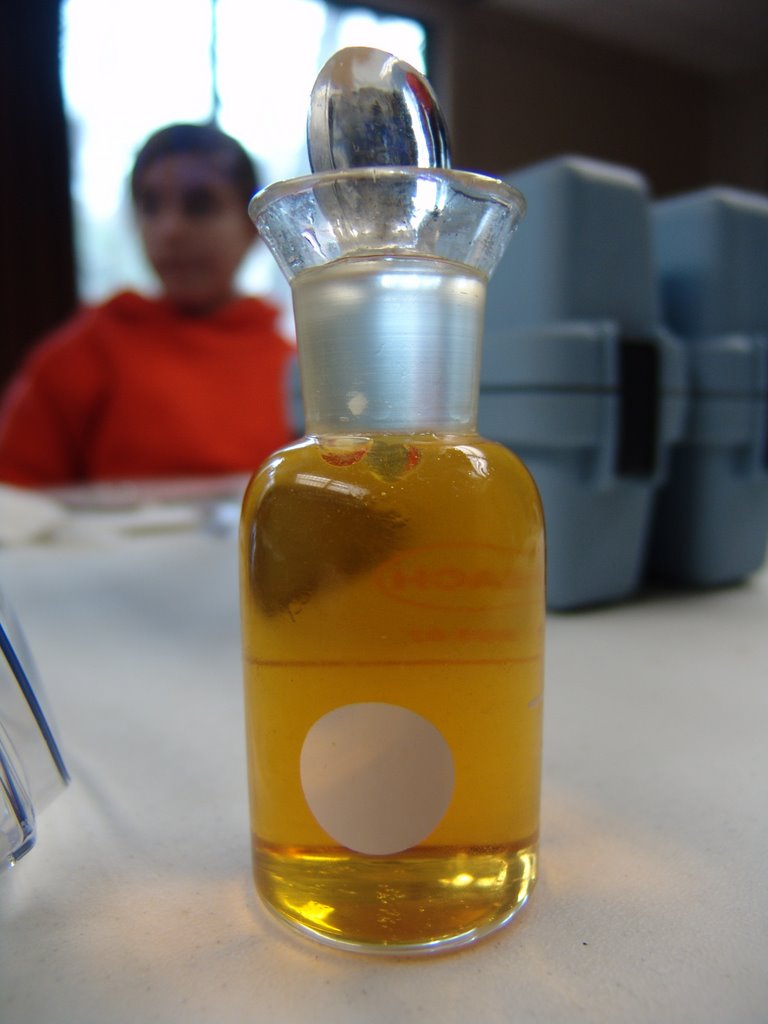
Today, quarterly macroinvertebrate samples and water samples were collected at the Francis Beidler Forest. The macroinvertebrate samples will be picked through this weekend and the collected organisms will be sent to Dr. John Morse, Clemson University, as part of his 29-year study. The following data is collected for the water samples: temperature, pH, dissolved oxygen, hardness, turbidity, phosphates, nitates, and nitrites. The image shows the dissolved oxygen test in progress.
Both the macroinvertebrate inventory and the chemical water tests provide the staff at FBF with water quality information. The macroinvertebrate inventory provides qualitative results while the chemical testing provides quantitative results. Depending on the number and species of macroinvertebrates present, the staff can determine if the water quality is poor to excellent. Some species are very tolerant of pollution while other species are quite intolerant of pollution. Therefore, a large quantity of pollution-tolerant organisms in the absence of pollution-intolerant organisms would indicate poor water quality. Chemical testing of the water provides quanitative results such as today's Goodson Lake data: 7.0 degrees Celcius, 7.0 pH, and 10 mg/L dissolved oxygen. Obviously, if the water is too acidic or too basic, many organisms cannot survive. Aquatic organisms require oxygen, like terrestrial organisms, though they obtain the oxygen from the water instead of the air.
The water in the Francis Beidler Forest portion of Four Holes Swamp remains high-quality though E. coli is an issue in the upper reaches of the swamp near urban centers.
Wednesday, January 17, 2007
Red-shouldered Hawk

Today, several Francis Beidler Forest staff members saw a Red-shouldered Hawk(Buteo lineatus) on the handrail of the ramp leading to the nature center, near the outdoor classroom and perched 10 feet above the parking area. These hawks prefer forests with an open understory, especially those near water or flooded like Four Holes Swamp. They will hunt from a perch (see image) and pounce on their prey, which include small mammals, birds, reptiles, amphibians, and crayfish.
Mating season for Red-shouldered Hawks is from late January to July. They make their nest in the crotch between a limb and the main trunk of a tree. The nest is constructed of sticks and twigs and lined with finer twigs, bark, evergreen sprigs, dried leaves, moss, or down. The chicks will hatch in 28 to 33 days and fledge after an additional 39 to 45 days.
A visitor reported seeing "two fluffy hawk chicks" sitting together on a branch west of the boardwalk on the way to Goodson Lake. Hopefully, we can verify that sighting. Possibly the warm winter weather encouraged the hawks to start their family early.
Tuesday, January 16, 2007
Office Space

As the staff and educational programming at the Francis Beidler Forest continue to grow, the space in the 1970s-era nature center has become increasingly constricted.
Today was moving day for the education director and the important bird area coordinator as the space previously occupied by one full-time staff member became the office of two full-time staff members. The image shows the new office space (mid-move) for the education director. It is literally a corner office with a view!
Tomorrow will be reorganization day with files in the cabinet and books on the yet-to-be-constructed shelves.
Sunday, January 14, 2007
Canoe Trail

The canoe trail at the Francis Beidler Forest stretches two miles upstream from Mallard Lake to a point 300 meters east of the boardwalk at Goodson Lake. Scheduled guided tours are available Mar-May and other times of the year based on water levels, guide availability, and group size.
Although the cooler weather limits the animal sightings, we enjoyed a pleasant paddle through the virgin, old-growth forest. Today, we heard a Barred Owl (Strix varia), a Yellow-bellied Sapsucker (Sphyrapicus varius), saw seven Yellow-bellied Sliders (Trachemys scripta scripta), an Anhinga (Anhinga anhinga), and four Wood Ducks (Aix sponsa) like those in the image.
Friday, January 12, 2007
Noisette Creek


Audubon South Carolina continues to work with The Noisette Company and its Michaux Conservancy to restore Noisette Creek. Noisette Creek is located at the northern end of the former Charleston Navy Yard (later Charleston Naval Base) and drains into the Cooper River a relatively small area in the "neck" of the Charleston Peninsula.
Various groups and agencies are involved in the actual restoration process. Audubon South Carolina is creating bird survey and water quality testing protocols to be used by students from the nearby Charleston Academic Magnet High School. By collecting information on bird populations and water quality prior to the restoration of the marshes within the Noisette Creek watershed, students and Audubon South Carolina will be creating a baseline with which to evaluate the effects of the restoration efforts.
Yesterday, during a 1.5-hour visit, Audubon staff identified 22 bird species, including Hooded Mergansers, a Brown Pelican, a Common Yellowthroat, adult and juvenile Black-crowned Night Herons, Great Blue Herons, White Ibis, Great Egrets, Snowy Egrets, more than a dozen Yellow-rumped Warblers, Loggerhead Shrikes, Anhingas, Belted Kingfishers, Pied-billed Grebes, and a variety of common backyard birds.
Wednesday, January 10, 2007
Great Backyard Bird Count

The Great Backyard Bird Count is February 16-19, 2007! The results for South Carolina in 2006 can be found here. There are numerous non-reporting areas in our state. We didn't make the Top 10 for number of checklists submitted, but we were #10 for total number of species reported. Join us in this Citizen Science opportunity and let's move South Carolina up the list!
"The Great Backyard Bird Count is an annual four-day event that engages bird watchers of all ages in counting birds to create a real-time snapshot of where the birds are across the continent. Anyone can participate, from beginning bird watchers to experts. It takes as little as 15 minutes. It’s free, fun, and easy—and it helps the birds.
Participants count birds anywhere for as little or as long as they wish during the four-day period. They tally the highest number of birds of each species seen together at any one time. To report their counts, they fill out an online checklist at the Great Backyard Bird Count web site.
As the count progresses, anyone with Internet access can explore what is being reported from their own towns or anywhere in the United States and Canada. They can also see how this year's numbers compare with those from previous years. Participants may also send in photographs of the birds they see. A selection of images is posted in the online photo gallery.
In 2006, participants reported a record-breaking 7.5 million birds of 623 species. They submitted 60,616 checklists, just 433 shy of an all-time record for total checklists."--birdsource.org
Tuesday, January 09, 2007
Mystery Crayfish

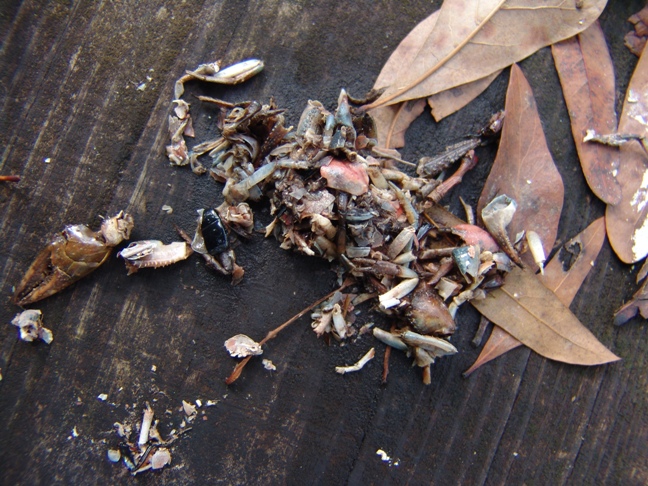
The mystery was not what creature had previously been constructed of the parts, but what creature had deposited the parts onto the boardwalk. The collection of crayfish parts shown in the image was discovered on the boardwalk 50 meters from the nature center. Detective work is one of the enjoyable aspects of our work as naturalists.
Several animals eat crayfish here in the swamp including River Otters, Yellow-crowned Night Herons, Raccoons, White Ibis, and Barred Owls. By looking at the pile of parts, it could be seen that the majority of the pieces were bound together as if they had been squeezed in the one's palm or constricted in an esophagus. The parts did not appear discolored (orange/pink) as one might expect if they had traveled through a digestive system or boiled in a pot. There were no signs in the crayfish parts of other fecal matter or the distinctive white material produced by a bird's urinary system. Therefore, it is unlikely that the pile of crayfish parts came from an otter, a heron, a raccoon, or an ibis as all these animals would pass the indigestible portions of their meals completely through their digestive system. As owls regurgitate the indigestible parts of their meals (hair, bones, scales, exoskeletons), we concluded that a Barred Owl (Strix varia) perched on the handrail (where there was a quantity of white bird waste) after consuming several crayfish and then relieved itself before flying off. The crayfish parts were still quite moist, so we did not miss seeing the owl by much.
Saturday, January 06, 2007
Bird Roadkill

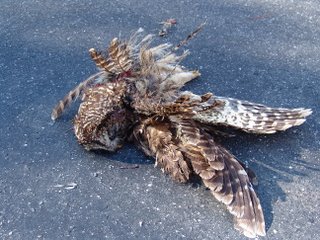
We do not have any numbers regarding the number of animals killed along roads in and around Four Holes Swamp, but over the years it is obvious that roads are a deadly hazard to many of the species that reside in the swamp. The larger animals usually attract our attention as why drive by, but certainly smaller animals, including birds, suffer similarly when they make contact with a fast-moving vehicle.
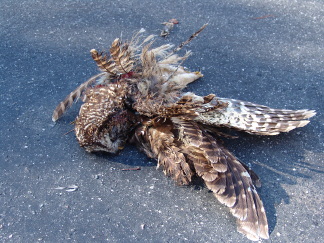
On the drive from Summerville to the Francis Beidler Forest along U.S. Hwy 78, U.S. Hwy 178, Beidler Forest Rd., and Mimms Rd., we have seen deer, a bobcat, an otter, numerous Barred Owls, various snakes, raccoons, opossums, a coyote, a beaver, a turkey, rabbits, squirrels, turtles, hawks, domestic ducks, a and Gray Fox dead along the road. Today, we collected a dead Barred Owl along Beidler Forest Road and were able to salvage both talons and wings for use in our education program. We would much prefer to see the owl in the swamp while leading a group around the boardwalk.
Roads are not a natural part of the environment and can cause animal mortalities when they cross established migratory routes or fragment animal habitat. Unfortunately, roads can also be attractive to animals. The grassy right-of-ways along roads and under power lines that often parallel roads provide suitable food for a variety of rodents. Rodents are prey items for larger animals that can become fixated on their prospective meal and oblivious to vehicles approaching a great speed. Additionally, power line poles and trees at the edge of the right-of-ways provide excellent observation posts for birds of prey to survey the open areas along the road. Once they spot their prey and begin their attack glide, they will often cross the road at a height consistent with that of a passing vehicle.
More roads increase the fragmentation of habitat while increased traffic proportionally increases the number of animals killed by collisions with vehicles. In the short term, we can slow down and remain alert as we drive. However, in the future, if we hope to have sufficient habitat and animals living in that habitat, we will need to consider alternatives to more roads as a solution to increasing traffic.
Friday, January 05, 2007
Lecture on Ivory-billed Woodpecker
On February 8th, the Charleston Audubon Society will host a lecture by Scott Simon, Director of The Nature Conservancy in Arkansas and co-leader of the search for the Ivory-billed Woodpecker.
Thursday, January 04, 2007
Longleaf Pine Planting


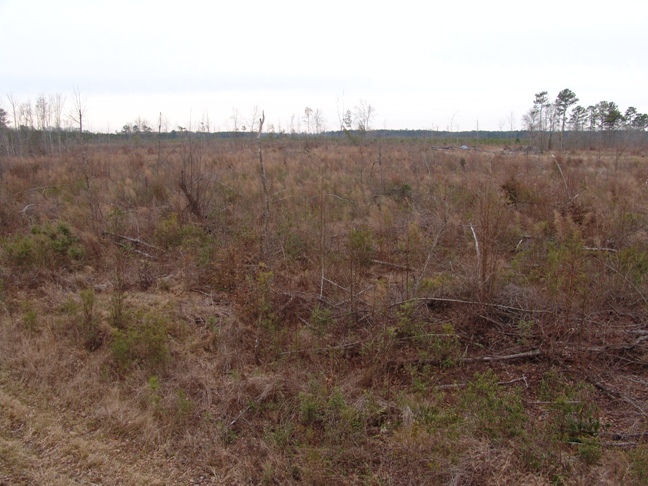
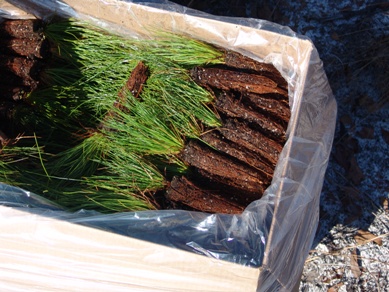
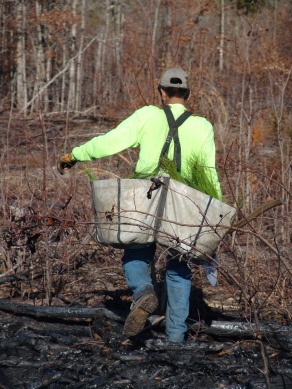
On December 21, 2006 (see blog entry), we burned a recently aquired tract of land in order to restore the native Longleaf Pine/Wiregrass forest. Yesterday, over 9,000 Longleaf Pine seedlings (see image) were planted on the same land.
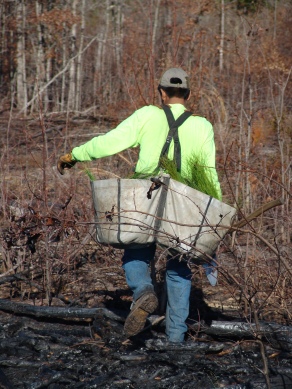
The planting was accomplished by hand. Planters carried the seedlings in large sacks as they moved across the 30 acres. Using a hoedad (blade visible below the right bag in the image), planters made a hole in the soil, dropped in the seedling, closed the hole, took 13 steps and repeated the process over 9,000 times.
Images and GPS coordinates were taken at four locations around the tract. We will continue to take images at the same locations to record the transition of the land from its current state to a mature Longleaf Pine forest.