Wednesday, July 21, 2010

Summer Camp Session #3

Summer camp session #3 is underway at the Audubon Center at Francis Beidler Forest.  The heat and humidity are slowing down everything, including the reptiles and amphibians, but we did manage to collect a few specimens for the campers to identify.


Spotted Turtle


Green Treefrog


Three-lined Salamander


Carolina Anole


Musk Turtle


iPod Touch with Audubon field guides


Eastern Mud Turtle


Tomorrow, we will check the baited minnow traps.  Hopefully, the sardines have attracted something other than crayfish and diving beetles.  During session #1, we caught a Lesser Siren and hopes are high that a Greater Siren is out there or even a snake not yet seen by the campers.


Maybe the incoming storm front will cool down things in the swamp, bump up the water level and get some creatures moving about!

Images by Mark Musselman

Friday, July 16, 2010

Rain in the Swamp

Although there was no rain at any of our homes from Ridgeville to Summerville to West Ashley, there was plenty of weather action at the Audubon Center at Francis Beidler Forest.  The seasonal naturalists living at the cabin at Mallard Lake reported over 2" of rain, high winds and multiple nearby lightning strikes!  Fallen snags and branches littered the driveway on the way into the center, so we took a quick trip around the boardwalk to check for damage.

Nature's pruning service deposited hundreds of small to medium branches throughout the length of the boardwalk, but all of the fallen snags and large branches missed hitting the boardwalk.  The rain filled all the depressions in the higher ground along the swamp's edge and raised the level of water across the swamp.  Only a few places of earth remain above the water (shallow though it may be) within the swamp's floodplain.  We saw numerous species of fish and turtles exploiting the newly-submerged territory and its potential sources of food.


We also encountered an adult Yellow-crowned Night Heron (Nyctanassa violacea) and what appeared to be its fledgling.  Both flushed from the shallow water at the swamp's edge with the fledgling landing midway up the canopy and the adult landing on the handrail of the boardwalk.  As we were taking images of the adult, a Mississippi Kite (Ictinia mississippiensis) called as it flew overhead.  Though herons are not even a possibility on the kite's dinner menu (mostly insects with an occasional bat, amphibian or lizard), the adult Yellow-crowned Night Heron took a keen interest in the kite's presence.


Just past #15, we arrived at a Golden Silk Orbweaver's (Nephila clavipes) web shortly after a moth had blundered into it.  The large female was in the process of dispatching and wrapping up her meal.  The considerably-smaller male remained at the top of the web and appeared interested in the meal, but maintain his distance as not to become part of the meal!  The female will continue to grow throughout the summer reaching an arachnophobe's nightmare proportions.


The timing of the higher water in the swamp is perfect for the start of the final summer camp session on Monday.  Monday's activities include a herp identification activity, so we should have little trouble finding amphibian and reptile specimens this weekend!

Images by Mark Musselman

Thursday, July 15, 2010

Ebony Jewelwing Study

Several months ago, Dr. Chris Hassall of Canada's Carleton University biology department asked if we would assist with his Ebony Jewelwing (Calopteryx maculata) damselfly study by collecting male specimens from the old-growth, cypress-tupelo swamp at Audubon's Francis Beidler Forest.  Dr. Hassall is looking at variation in morphology of the Ebony Jewelwing damselfly across its range, which includes the eastern two thirds of the United States and eastern Canada.

Yesterday, we had the opportunity to head out into the swamp and collect Ebony Jewelwings along the boardwalk (Site A) and downstream along the canoe trail (Site B).  In the Google Earth image below, Site A is shown in red and Site B is shown in yellow.  The collection sites were not as large as the shaded area as we were never more than 10 meters from the boardwalk or the canoe trail.  However, the graphics were expanded slightly so that they would show on the map.


Although damselflies are in the same order (Odonata) as dragonflies, there are differences.  The wings of a dragonfly are horizontal to the body when the insect is perched, while a damselfly's wings are held vertically when perched.  A dragonfly's wings remain nearly horizontal as it flies, while a damselfly flits about like a butterfly with its wings ranging from horizontal or vertical as it flies.  They can remain still for long periods, which makes them difficult to locate when perched.  Damselflies eat insects, mostly gnats, but they are a prey item for some species of dragonflies.  Therefore, the Ebony Jewelwing's ability to remain motionless protects it from predators and net-swinging, for-the-day researchers.

Male and female Ebony Jewelwings can be identified by their wings. Males, our target, have all-black wings, while the females accessorize with a white dot (stigma) at the end of each wing.


Once a male Ebony Jewelwing was spotted, we approached the damselfly with the insect net at the ready.  As noted earlier, the damselflies would remain motionless as we approached.  However, if we missed on our first attempt, the jig was up!  The damselfly in question would know that we were a threat and flit away just as we reached the appropriated distance for another strike attempt.  How foolish can a small insect in a swamp make a mammal look in pursuit?  Ah...let us count the ways.  There are more than a few male Ebony Jewelwings that will be passing along their escape and evade DNA!


For those male Ebony Jewelwing less adept at evasion, the insect net was likely (but not always) the last stop before being quickly euthanized in a jar of nail polish remover (acetone) fumes.  We collected and packaged 11 male Ebony Jewelwings from each site.  That number will not have a detrimental effect on the population at the Francis Beidler Forest, but it will hopefully contribute to a better understanding of the species across its range.


"...and you call that work?"  We did!

Images by Mark Musselman

Wednesday, June 30, 2010

Carolina Wren Nest

Over the years, the sand-filled cigarette disposal container by the front door of the Audubon Center at Francis Beidler Forest has been selected as a nest site by Carolina Wrens (Thryothorus ludovicianus).  Although eggs are laid and incubated for two weeks before the chicks hatch, a predator (raccoon or snake) makes a meal of the brood within the first few days.  Additionally, the nest is located in a high-traffic area, which has to be stressful on a predator-paranoid parent!


This morning, we arrived to find a two leaves in the sand meant for cigarette butts.  With frequent, short forays, the pair or wrens quickly incorporated the two starter leaves into a small pile of other leaves, rootlets, and moss.  The video below shows only a few seconds of their feverish activity!


Hopefully, this pair will have better luck.

Video and images by Mark Musselman

Monday, June 28, 2010

Summer Camp Session #2

On Friday, the second session of summer camp ended at the Audubon Center at Francis Beidler Forest.  Images from session #1 can be seen here.

The order of events for the second session changed slightly due to Dennis Blejski's work schedule.  We had the herp identification activity after lunch on the first day.  We captured some of the specimens over the weekend, but found an Eastern Box Turtle and a Glass Lizard crossing roads on our way to work and a Southern Copperhead crossing the Beidler Forest driveway.  A couple of lizards around the picnic tables and we had a collection filling all 18 stations!


Southern Copperhead and Eastern Box Turtle


Southern Copperhead
Common Snapping Turtle
Corn Snake
Southern Leopard Frog
Three-lined Salamander
Gray Treefrog

Eastern Box Turtle
Southern Toad (toadlet)
Ground Skink
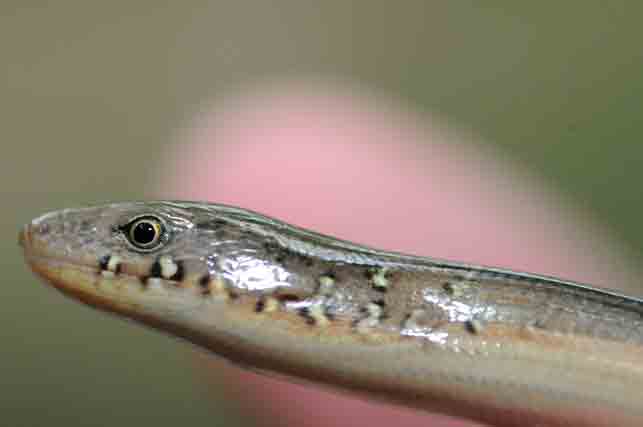
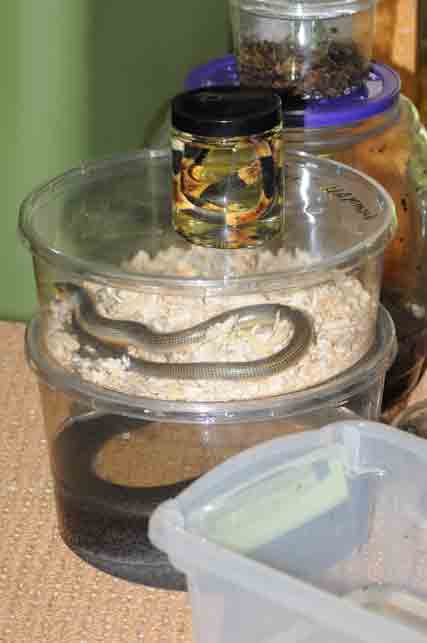
Glass Lizard
Southern Dusky Salamander
Southern Leopard Frog
Gray Treefrog

On Tuesday, we took our first trip around the boardwalk.  We are not the only creatures that choose not to move around when the heat and the humidity begin to soar!  Animal sightings were few.

Brown Water Snake
Barred Owl

After lunch on the second day, Dennis Blejski brought a collection of herps from his collection.


Bullfrog
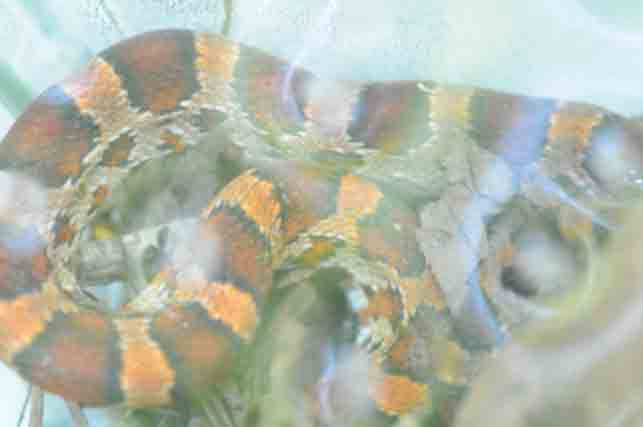
Scarlet Kingsnake
Diamondback Terrapin
American Alligator


Greater Siren

While off the boardwalk, we saw a variety of animals, but the magnificently-camouflaged Southern Copperhead was the highlight of the walk!


Centipede
Millipede
Southern Copperhead

Although amphibians are secretive and sunny, hot days are not the best conditions for finding them, campers did use their newly-learned frog call skills to identify various singing treefrogs.  We also nearly stepped on a Marbled Salamander while checking our minnow traps behind the outdoor classroom.


Marbled Salamander


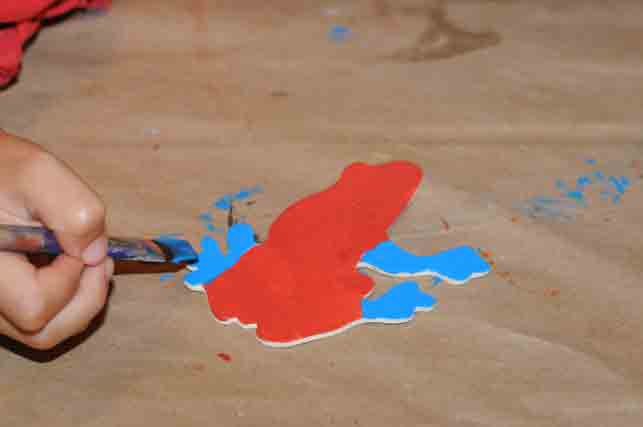
Throughout the week, campers also created various herp-related art items.


Camp ended on Friday with a herpathon along the boardwalk, lunch with families, and the presentation of diplomas and a CD of the week's images and sounds.  Appropriately, a Southern Black Racer moved through the picnic area to help close out the week of herps.

Southern Black Racer

The final session begins the third week of July.  Let's hope the herps don't get a summer vacation!

Images by Mark Musselman